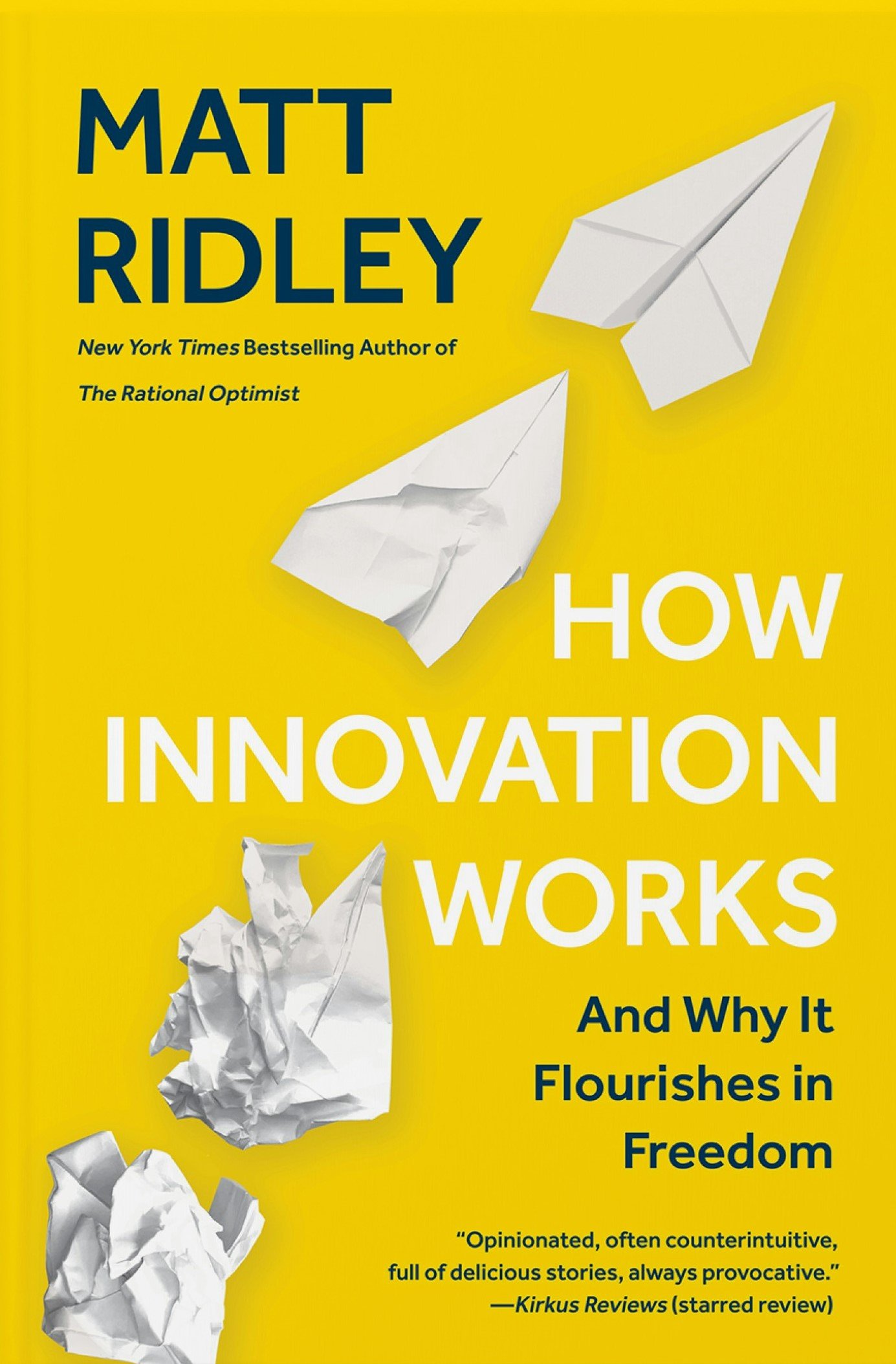
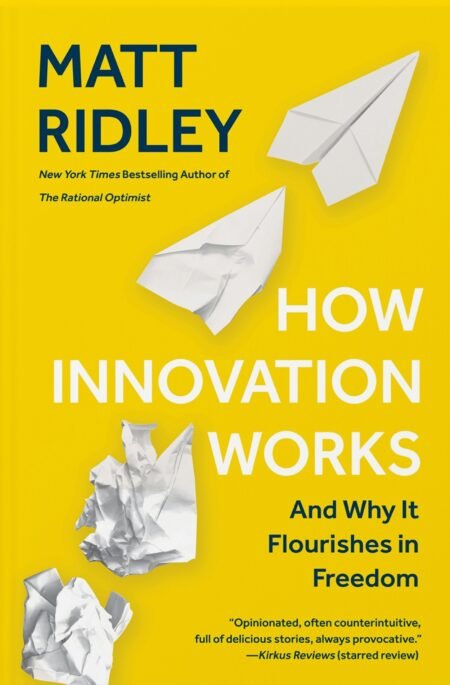
Description
How Innovation Works challenges the popular “eureka moment” myth, instead framing innovation as an evolutionary phenomenon driven by human collaboration. Ridley draws on dozens of lively historical stories—covering energy, public health, transportation, and computing—to illustrate several key principles:
- Gradualism: Most significant advancements are the result of small, cumulative improvements over time.
- Recombination: He famously states that “innovation happens when ideas have sex,” meaning new technologies almost always arise from combining existing ones in novel ways.
- The Power of Freedom: The book’s central thesis is that innovation cannot be forced or planned from the top down by governments; it requires a decentralized environment of intellectual and economic freedom to flourish.
- Trial and Error: Ridley emphasizes that the most successful innovators are those who are free to fail, allowing them to iterate until a practical and affordable product is achieved.
Ultimately, the book serves as both a history of human progress and a cautionary warning about the modern “innovation famine” caused by excessive regulation and restrictive intellectual property laws.







Reviews
There are no reviews yet.